Sunday, 24 July 2011

Bikesafe - The Secret is Out!


The rumour mill is leaking news that Thames Valley Police (covering Berkshire, Oxfordshire and Buckinghamshire) have been given approval to take part in the national Bikesafe initiative, typically one-day sessions as a 'taster' of advanced rider training.  Until now they've been a noticeable 'hole' in the UK coverage map of areas providing it.

The sessions are likely to start next year, and cost £75.  With the recent news that TVP are likely to be losing many officers over the next few years and with their 'traffic' division merging with Hampshire's - and further manpower cuts, this introduction of Bikesafe is somewhat surprising!

What, perhaps, makes this all the more amazing is that Thames Valley police were involved right at the start of Bikesafe back in 2000, including this video featuring the late Phil Curtis, a legendary character, police motorcycle instructor and experienced racer, and some bloke called Troy Bayliss (whatever happened to him?):


More about Bikesafe:
http://www.bikesafe.co.uk/Index.aspx

‘BikeSafe’ is a nationwide police-led motorcyclist casualty reduction initiative that is run by the majority of forces throughout England, Wales, Scotland and Ireland. The scheme in various guises has been in existence for many years. There are presently 43 forces in England, Wales, Scotland and Ireland participating. Large numbers of riders attend ‘BikeSafe’ sessions annually. ‘BikeSafe’ works toward Government casualty reduction targets in an effort to reduce the number of people killed and seriously injured in road collisions.


‘BikeSafe’ strategy is to engage with post-test riders in a conflict free environment to consider and analyse why motorcycle crashes are happening, including the attitudinal and motivational issues. There are fewer causes than you might imagine with five strong themes emerging throughout the country. Filtering, junctions, cornering, overtaking and group riding are the problem areas. Really obvious things seem to be placing everyday riders in life threatening scenarios.

In the classroom, ‘BikeSafe’ can offer potential solutions to the most prevalent crash causes and thereafter, following an observed ride element, prepare an individual rider development report which can be taken to a post-test training provider. ‘BikeSafe’ is about ‘Bridging the Gap’ into accredited training.


Fast approaching . . .


The National Bikesafe Event
http://www.bikesafe.co.uk/News/Article/National-BikeSafe-Event.aspx

A great family day out on the 4th September 2011. 10am – 5pm at The Heritage Motor Centre, Junction 12, M40. Entry into the event is free. Museum admission prices apply. For more information http://www.heritage-motor-centre.co.uk/ or call 01926 641188
If you ride a motorbike or scooter this is the show for you!
• Manufacturers/dealer bikes
• Motorcycle clubs
• Motorcycle stunt riders and displays
• Try before you buy scooter arena
• Observed rides available - conditions apply
• Motorcycle clothing and accessories
• Refreshments

Information flyer (pdf):
https://www.bikesafe.co.uk/Uploads/ContentPages/CMS/Documents/National%20Event%20flyer%202011.pdf


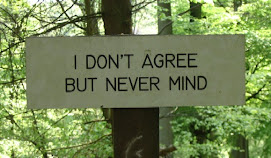
And finally . . . (as they used to say on all the best TV news broadcasts), this isn't from Bikesafe:


I think they meant 'bike save'!


.

Wednesday, 20 July 2011

Big Match Nerves

There seems to be a variety of sport about at the moment in the news: Henley Regatta, Wimbledon tennis, golf, and the Olympics are never far from the news either.
All of these require the participants to be a the peak of their potential - but able to perform without distraction from the inevitable pressures of crowds and media attention.
You might not think that sort of 'big match' pressure would ever apply to you while out riding, but it can.

I had a Born Again trainee who could do one thing at once, not two. She could perform good clutch control and ride well in a straight line. When parked, she could turn her head to look through a turn.
But not together.
So I asked whether she liked music, and what type?
“Well,” answered this mother of two teenage boys “Heavy rock, actually!”


So I got her to sing ‘Born to be wild’ as I pushed her around a loop (big enough that we’d just got to the chorus at the end of the first verse as I collapsed). Quite happily, she was looking through the turn.


The way I use this is that the left, logical, side of the brain is the side that nags: “Oooh, last time you were in front of a crowd you tensed up. Whatever you do, don’t think about TENSING UP!”. So the right side of the brain, that just wants to get on and do it, gets over-ruled.

Solution? Give the left side something to do, it’ll be happy when it’s busy and won’t make mischief.
Singing is good as it takes a lot of concentration. Another – particularly good for riders who’ve had cornering problems (that’s a euphemism for ‘crash’) can tell the L side to talk them through what they should be doing rather than picking fault: “Slow now, press now, look now, roll now”, etc.

People talk about ‘the power of positive thought’ without actually understanding what it can achieve or its limits – try using the ‘tell me’ method to juggle and you won’t be able to think fast enough! Also, if you’re going to talk yourself through an action you need to know what ‘perfect’ looks like.
Then use self-awareness to measure how you need to ‘close the gap’, set small targets for achievement that you can complete. This is where an instructor can help, both with target setting (deciding exercises etc.) and encouragement.

Visualisation is excellent, too.
Long version:
http://www.dropzone.com/safety/articles/Visualizing.shtml
Shorter:
http://www.skydive-info.com/skydiving/showthread.php?t=235
http://www.skydive-info.com/skydiving/showthread.php?p=1711


.

Monday, 18 July 2011

Road Safety Dog?


No, not that dog, it just seemed like a good place to re-use the photo.


The BBC's Top Gear programme has its very own TGD - Top Gear Dog - so I thought there should be an equivalent: Road Safety Dog :)

 
I've used a 'dog' comparison previously when discussing better riding (or better driving, if you prefer), in particular comparing the Motorcycle Safety Foundation (MSF) use of the mental system 'Search Predict Act' (now superseded by Search Evaluate Execute) against the UK's 'Observe Plan Act'.

 
What's the difference? Well, I like words and, following on from the UK's history of police-derived rider training, the word 'observe' puts me in mind of a copper sat in a car 'on obbo', filling his face with coffee and doughnuts - observing a premises or person; very static, very reactive.

 
Compare that to the police ‘drugs’ dog, searching for a hidden stash - sticking his nose in everywhere, no stone unturned; an active, dynamic process.

 
Now put both into the riding context. Which do you think is best, a passive 'waiting for something to happen' attitude - or an active attitude, searching for hazards ahead. It's probably not a surprise that I prefer the 'active' attitude of the word 'search'.

 
So why am I bringing Road Safety Dog out for another walk along the highways?

 
Well, he provides a very simple way of explaining how 'visibility' differs from 'conspicuity', and the varying types of conspicuity which exist.

 
So, what is 'visibility'? Quite simply, it means something is visible, it's not hidden. Inside his kennel RSD is probably hidden from your view, so he's not visible. When he walks out to bask in the Sun he then becomes visible.


But is he 'conspicuous'?


Well, possibly. But there are three levels of conspicuity:
  • Search conspicuity
  • Attention conspicuity
  • Cognitive conspicuity

 
RSD can do all of these! In doing so, he may help you understand how you may - or may not - be seen when out on the road.

 
If you walk into a room, and just glance around, you may miss Road Safety Dog because he’s asleep in the far corner. But if I ask you to look for a dog you’re more likely to see him. That, perhaps unsurprisingly, is called ‘search conspicuity’.

 
However, I didn’t ask you to look for him, so you’ve walked across the room but, unfortunately, happen to be near his favourite toy. He’s not happy - so growls. You look around, and see RSD. He growled, you looked. That’s ‘attention conspicuity’. In ‘road user’ terms that might be a headlamp, DRL or hi-viz – or tooting your horn to try and get a driver to look at you.

 
But you may not actually know what a dog is, or how sharp RSD’s teeth might be . . . If you know those things, then you might be more wary of picking up his bone without his permission. And that knowledge, those associations, are cognitive conspicuity – an understanding of the meaning ‘behind’ what you see. Again, in ‘road’ terms, a driver needs to know that ‘single light = motorcycle’, not ‘single light = car far away’, and also that ‘headlamp = person on a bike’. Better still, the driver would have an understanding of a bike’s braking and handling limitations.


At a guess, this was the 'ruff guide’ to road safety :)


Want to know more? Have a read here:

 
http://www.visualexpert.com/Resources/inattentionalblindness.html

Loads of interesting articles.


.

Friday, 17 June 2011

Community Policing - Ilse of Man TT Style

Some people enjoy their work, but this police officer on the Ilse of Man really enjoys his work - and provides entertainment for the crowd too!

Seen during TT week 2011.


.

Thursday, 16 June 2011

Training Downloads

A couple of free training downloads, written by US MSF rider coach Becky Tillman of the Riders Edge Harley Davidson Academy of Motorcycling.

Slow riding and turning at slow speed
http://www.provincewidehog.com/wp-content/uploads/2011/01/Chapter-Slow-Riding-HD-Info.pdf

Understanding traction ('grip') and the traction 'pie'
http://www.windwardhog.net/Safety/GRABBING_A_PIECE_OF_TRACTION_PIE.pdf


.

Tuesday, 14 June 2011

Monday, 13 June 2011

The Stig - Allenminium?

A visit today, to a show at Highclere Castle, which included ride in the 'Stig' simulator, featuring two laps of the 'Top Gear' test track (in a Veyron and a Caterham open-top single-seater). But I was intrigued by the advertising blurb displayed on the side of the truck . . .


To be honest, I don't know - and can't decide - whether this is a 'translation error' in best 'Chinese Whispers' fashion, whether the blurb was written by someone with limited (or no) engineering knowledge, or whether it's a simple mistake where someone knew what they meant but just didn't know exactly what the tool is called.


Background reading:

Allen Key

Alum

BBC Top Gear Test Track

.

Sunday, 12 June 2011

Cornering - Smug :)


Having a few minutes to spare, I took a rare opportunity and wandered into the local WH Smith to browse the motorcycle magazines.  MCS&L . . . interesting, but not that interesting . . . Ah!  RiDE, a 'better riding' article.  Who's it by?  members of the Lincs. casualty reduction team, or similar organisation.

Content?  Hmmmm . . . some's based around the three-step cornering system of 'Look-Lean-Roll'.

This particular system is taught by the Thames Vale Advanced Motorcyclists group (IAM affiliated) during a one (or half?) day course.

It's been developed from principles used by the US Motorcycle Safety Foundation, and taught on their courses.  In the early to mid 1990s the US Air Force had several bases in the UK, and one USAF Master Sgt, Garth Leonard, managed to get about 80 UK civilians through the MSF's 'advanced' course, the Experienced RiderCourse.  That number included 25 members of TVAM.

When the USAF mostly moved out of the UK at the end of the Cold War, and access to the course was no longer available, TVAM picked up the gauntlet and developed their own machine control course concentrating on just the 'cornering control' aspect.

So, why the 'smug' title to this post?

Well, I initiated the link-up with the USAF, initially in 1992 attended both 'leaner' and 'advanced' courses as a trainee, then in 1994 qualified as an MSF instructor, bringing along TVAM members to come of the courses I taught.  It's interesting to see how far the 'system' has moved on - especially since the current RiDE article doesn't use the system as originally intended.

In a strange way this also goes through, if not a loop then a twist, in that several years ago RiDE organised a set of post-test instructors to put some RiDE readers through training.

Here's one of the trainees, putting the MSF system into practice during the RiDE training session with, particularly here the 'Look through the corner' head turn is very obvious:


And here's the group during the theory session, including instructors from other training organisations:


Far left is journalist Damon I'Anson.

Read more on Slow, Look/Lean/Roll - and how it can be improved and simplified as a cornering system, here:
http://the-ride-info.blogspot.com/p/cornering.html


.

Saturday, 11 June 2011

Cornering - Going Viral?

Ever wondered why some Youtube videos go 'viral' but others don't?

Well, at the time of posting (Sat. 11th June) this one has gathered 55,800 views since it was posted on Youtube on the 7th June!


Rather him than me!  Although it did amuse that, when you watch it on Youtube, there's a 'show more' option . . . :)


.

Thursday, 9 June 2011

Helibikes new web site

Latest news from Alf Gasparro of the Thames Valley & Chiltern Air Ambulance:
Further to my previous correspondence, I am writing to update you on the Heli
Bikes Initiative.

After launching the Helibikes Facebook Page & Group Page, which has proven to be a good vehicle to disseminate information relating to motorcycling safety.


I have now launched a website to achieve the same objectives;www.helibikes.co.uk and I consider training to be a key component in
improving safety.

I have established a contacts page for training operations on the facebook
pages and I will be creating an area on the website shortly.


The site includes several first aid videos:
http://www.helibikes.co.uk/videos.html

.

Tuesday, 31 May 2011

Yellow Dot Car Program

From USA Today News:


A national program that immediately provides first responders with vital information about automobile crash victims is spreading rapidly, fueled by the growing wave of maturing Baby Boomers.
The Yellow Dot program is designed to help crash victims, especially seniors, communicate with rescuers during the crucial "golden hour," the first 60 minutes after a serious crash that can make the difference between life and death for the critically injured.
It is simple but effective: Participants in the free program receive a yellow dot to place on their rear window; it alerts emergency services personnel to look for a corresponding yellow folder in the glove box. That folder contains a photograph, their medical conditions, prescriptions and other vital information.
In Alabama, the program started in Etowah County in 2009; by June, it will be operating in 27 counties.
"There's a lot of interest from two different groups," says Lora Weaver, program coordinator for the Northeast Alabama Traffic Safety Office, who is adding two or three counties a month to the program.
"The residents of the state … realize the importance of it, particularly someone with a lot of medical issues. The second group is the first responders, because they know when they arrive, if the person is unable to communicate, they know they can go to the glove compartment and get the information they need, and they can do it immediately without wasting a lot of time."
The nation's first Yellow Dot program began in Connecticut in 2002. Yellow Dot programs, with slight variations from state to state, are in counties scattered across at least eight other states: Kansas, Illinois, Iowa, Minnesota, Massachusetts, Virginia, Alabama and New York. Georgia is among other states considering the program.
"It is very nice to see innovative programs to address the unique risks associated with older Americans and car crashes," says Peter Kissinger, president and CEO of AAA Foundation for Traffic Safety. "Since older individuals tend to have more medical conditions, are on more medications and are generally more fragile, this sounds like a well-justified program, especially in light of the growing number of older Americans."
"It's a promising approach," says Jonathan Adkins, spokesman for the Governors Highway Safety Association. "Actually, this is one of the goals of automated crash notification systems. Eventually, when there is a crash, these key data such as medication needed will automatically be available to EMTs, etc. The Yellow Dot program may be a system that can be helpful in the meantime."
Traci Pondick, 47, of Rainbow City, Ala., swears by it.
Her husband Marc's parents, Norman and Ping Pondick of Southside, Ala., enrolled in Yellow Dot soon after it began in Etowah County. Several months ago, Norman Pondick, 83, was driving alone in his pickup when he swerved to avoid hitting a car that had stopped in front of him. He left the road and hit a tree, lacerating his head.
"The first responders saw the sticker and immediately pulled the folder out," says Traci Pondick. "They called Marc. They were worried about the cut on his head."
Norman Pondick was air-lifted to University of Alabama-Birmingham hospital in Jefferson County. The family drove there.
"When we went back to see him, the nurse held up the Yellow Dot folder and said, 'Where did you get this?' Yellow Dot was not in Jefferson County at that time. I told her about it. She said, 'This is the best thing I've ever seen.'"
Norman Pondick soon recovered. Traci Pondick got her mother to enroll.


.

Stay a Hero

Do you remember the 'Embrace Life' seatbelt ad (which is heading for 14 million views on Youtube!)?

This is the new motorcycle ad from the same team.


Sussex Safer Roads Partnership say:

Stay A Hero, Stay Safe’ is our new campaign aimed at reducing the number of motorcyclists casualties on Sussex’s roads each year. Currently, nearly a quarter of all individuals killed and seriously injured are riding a motorcycle – a massive over-representation when you consider that motorcycles only account for around 5% of vehicles on the road.


We have worked again with Writer/Director Daniel Cox and Producer Sarah Alexander of Alexander Commercials to create ‘Stay A Hero’, with the express aim of developing something more than the standard biker safety ad.


.

Tuesday, 3 May 2011

"Sesame Street" does Road Safety (and so do Top Gear)

Sesame Workshop has appointed Grover at the Road Safety Ambassador as part of the United Nations Decade of Action on Road Safety. In these three Public Service Announcements, Grover promotes road safety behaviors addressing seatbelt, helmet and street crossing safety. The goal is to make road safety a family priority and a shared family experience.


Although, I like Top Gear's road safety broadcast:


.

Wednesday, 27 April 2011

Keith Code? Cornering Lines? That's Just Plain Wrong . . .


Many riders (and readers) don't like the Keith Code books and 'style', but it works for me.

OK, the books take a bit of 'translation' - both from the US-speak and because they're track-oriented rather than road.  That said, I've found them useful and they've influenced how I train other riders.

But Keith also places articles on his web site forum, the most recent is about cornering lines:
Lines

Usually they're an interesting read (although you need to gently peel away the sales blurp that's knitted within the text ;) ).

But this one had me muttering, at the line: "The most obvious component of riding is the space the rider used to negotiate the bend, in common speak it is his line."  To be fair, the rest of the article makes sense.

The gist is that you should hone 'accuracy' of lines on a track (by taking training ;) ) before you try lines on-road.  To a point I agree - although he's talking about 'accuracy' from some riders of 'within +/- 5 feet'!!!  That's a good part of the width of a typical UK road!  With that degree of random riding, being on a track has to be good for road safety.

But as far as skills and 'training' for on-road cornering go, I emphasise the approach, set-up and negotiation of the bend long before getting into the necessity of 'lines', as the basic skills should be fluent before essential brain capacity (Code's '$10' to spend) is used for planning and implementing 'lines'.

See the specific cornering page for more details.


.

Tuesday, 12 April 2011

Highway Code - 80th Birthday!

From the DSA:


On 14 April this year, the Highway Code celebrates its 80th anniversary.


When it was introduced in 1931 there were just 2.3 million motor vehicles in Great Britain, yet over 7,000 people were killed in road accidents each year. In 2009, this had fallen to 2,222 killed, despite there being over 30 million vehicles on the road.
Although road safety has come a long way over the years, the spirit of the Highway Code remains the same: the very first edition urged all road users to be careful and considerate towards others, putting safety first.
But of course some aspects of the Code have changed considerably. For example, in 1931 mirrors were not even mentioned and drivers were advised to sound their horn when overtaking.
More than a third of the original 24-page booklet was given to hand signals, compared to the single page covering the subject in the current edition.
The latest edition, published in 2007, was updated to include new legislation on vehicle emissions and smoking in vehicles, and references new initiatives like high- occupancy vehicle lanes, home zones and active traffic management schemes.
The Code is substantially updated every 8-10 years, meaning the next new edition is likely to be published sometime after 2015.

The 1931 edition:•cost one old penny
•was the only one to carry advertisements
•contained 18 pages of advice, compared to 93 pages in the 1999 edition
•included advice to drivers of horse drawn vehicles to 'rotate the whip above the head; then incline the whip to the right or left to show the direction in which the turn is to be made.'

Take the quiz
DSA's official publisher, TSO, has created a short quiz so all road users can see whether they need to brush up on their road knowledge. Take the quiz here: http://tinyurl.com/68u968p


From:
http://resources.govdelivery.com/resources/UKDSA/dsa_despatch_april2011.pdf


.